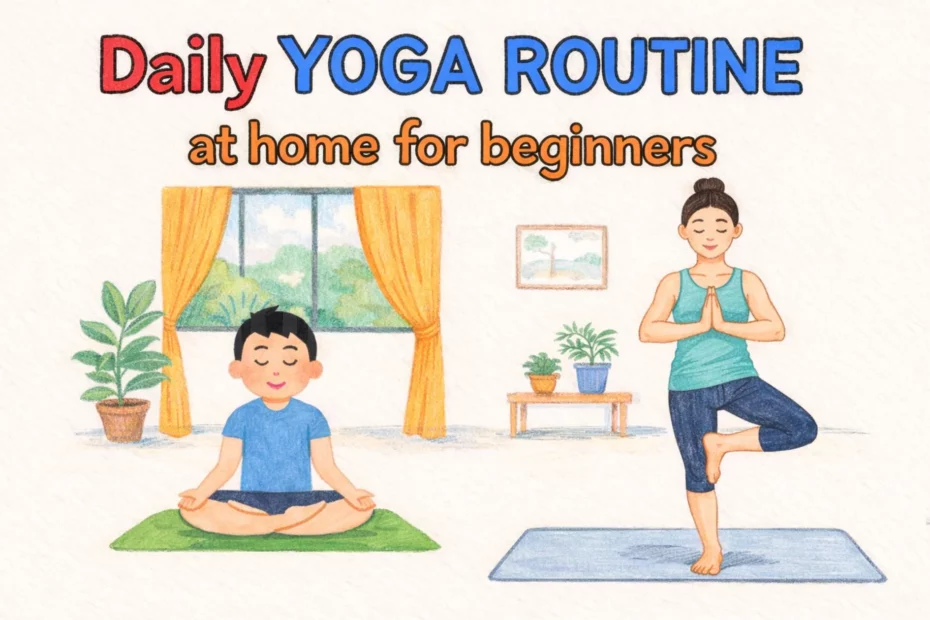
Starting yoga can feel confusing for beginners. Especially, designing a daily yoga routine when you are practicing at home. Many people think they need flexibility, expensive classes, or special equipment to begin. The truth is that yoga can be practiced at home, at your own pace, with simple movements and mindful breathing.
Yoga for beginners at home is all about building a habit, understanding your body, and moving gently. You don’t need to be perfect or flexible. With just 15-20 minutes a day, yoga can help improve posture, reduce stress, and increase overall well-being. This article will guide you through a simple daily yoga routine for beginners at home, along with tips, benefits, and common mistakes to avoid.
Why Start Yoga at Home as a Beginner?
Practicing yoga at home has many advantages, especially for beginners.
- You can practice at your own pace
- No pressure of group classes
- No expensive memberships
- Comfortable and private environment
- Easy to stay consistent
When you practice yoga at home, you learn to listen to your body. This helps you build confidence and create a long-term habit without stress or comparison.
Important Tips Before Starting a Daily Yoga Routine:
Before starting your yoga routine, keep these beginner-friendly tips in mind:
- Choose a quiet, clean space
- Wear comfortable clothing
- Practice on a yoga mat or soft surface
- Avoid practicing immediately after heavy meals
- Move slowly and gently
- Never force your body into a pose
We have already written a full article on the yoga rules for beginners; you must go through it once.
Simple Daily Yoga Routine at Home:
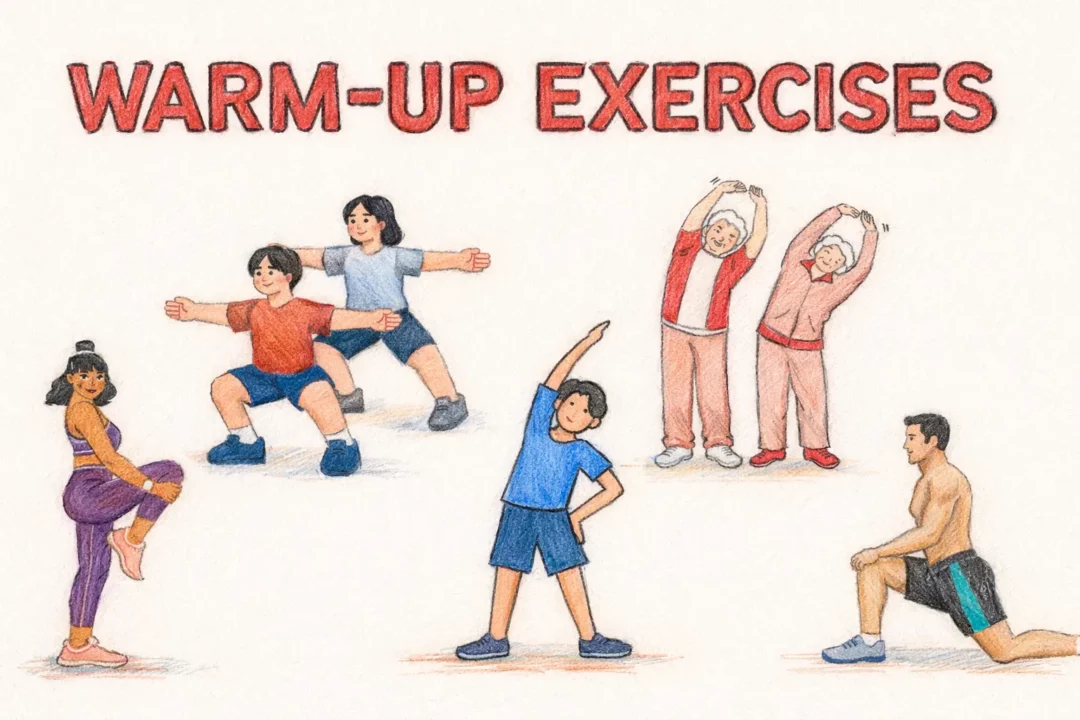
A) Warm-Up Exercises (5-7 minutes)
A short warm-up is an essential first step in any yoga routine, especially for beginners. After waking up or sitting for long hours, the body often feels stiff and inactive. Gentle warm-up movements such as neck rolls, shoulder rotations, and slow spinal movements help loosen the joints, improve circulation, and gradually prepare the body for yoga poses.
Warming up also helps beginners feel more connected to their body and reduces the chances of discomfort during practice. Taking just five minutes to ease into movement can make the entire yoga session feel smoother and more enjoyable. In Yoga, there is a term called ‘Sukshma Vyayama’ which literally translates to ‘Micro Exercises’. These are the exercises that involve very little movement but are highly effective when performed before going into yoga poses.
B) Standing Yoga Poses (8-10 minutes)
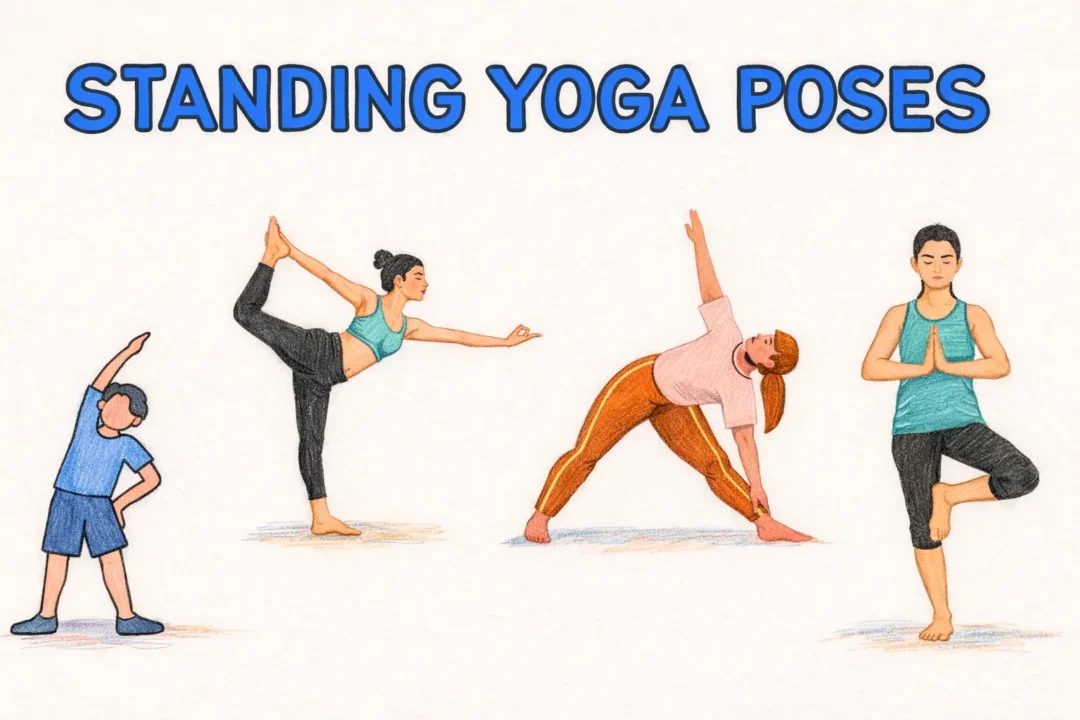
Standing poses form the foundation of a beginner’s yoga practice. Simple poses like Tadasana (Mountain Pose), Vrikshasana (Tree Pose), Veerbhadrasana (Warrior Pose), etc., help build awareness of posture, balance, and alignment. These poses encourage you to stand tall, feel grounded, and understand how your body distributes weight.
Practicing standing poses regularly also helps beginners develop stability and confidence before moving into seated or floor-based poses. Since these poses are easy to practice and don’t require flexibility, they are perfect for daily home routines.
You can include standing yoga poses of your choice/requirement in your routine. But if you are practicing yoga for general health and fitness, I would prefer the inclusion of ‘Surya Namaskara’ in your routine. Surya Namaskara includes 5-6 different poses and is called a ‘complete’ exercise because it works on almost every muscle and organ of the body.
C) Sitting Yoga Poses (5-7 minutes)
Sitting and floor poses allow the body to slow down and settle into the practice. Poses such as Sukhasana, variations of Padmasana, Ustrasana, and gentle seated forward bends help beginners become comfortable sitting on the floor while maintaining a relaxed spine. These poses also encourage mindfulness and help you stay present with your breath.
For beginners, it’s important to focus on comfort rather than perfection. Using cushions or folded blankets for support makes these poses more accessible and enjoyable. Over time, these poses help build flexibility and calmness in the practice.

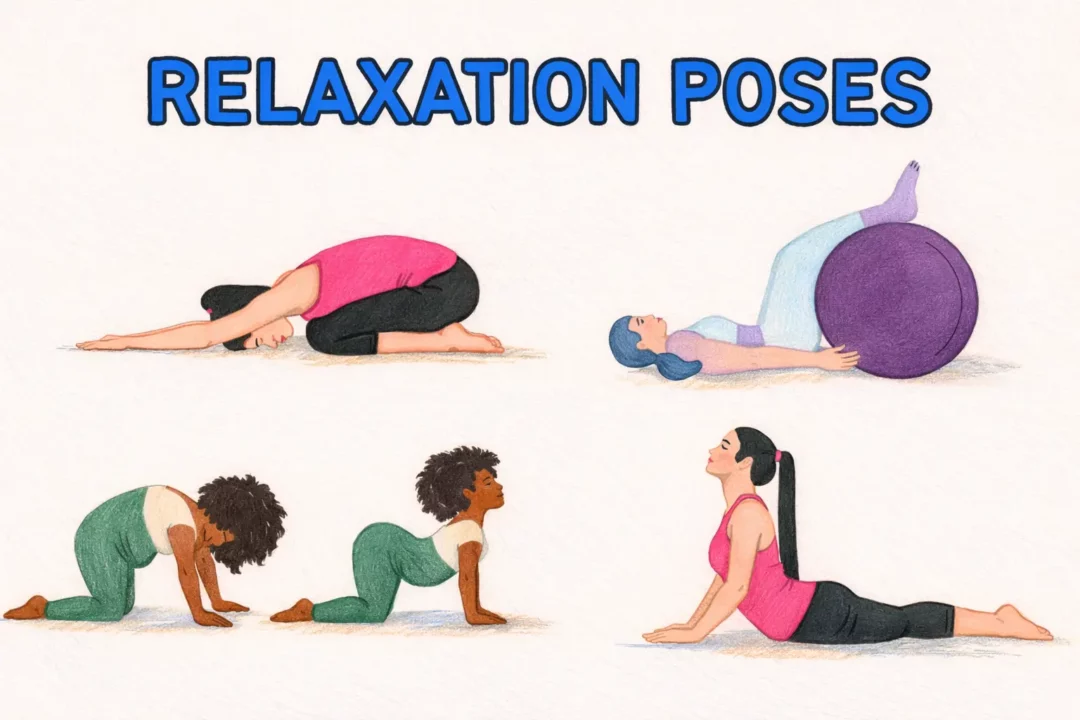
D) Relaxation Poses (5-7 minutes)
Gentle movements and relaxation poses, such as Cat–Cow, Child’s Pose, help the body unwind and relax after practice. These poses encourage rest, reduce physical fatigue, and allow beginners to fully absorb the benefits of yoga. These exercises also cool down the body after your yoga session. Ending the session with Shavasana helps create a sense of calm and balance.
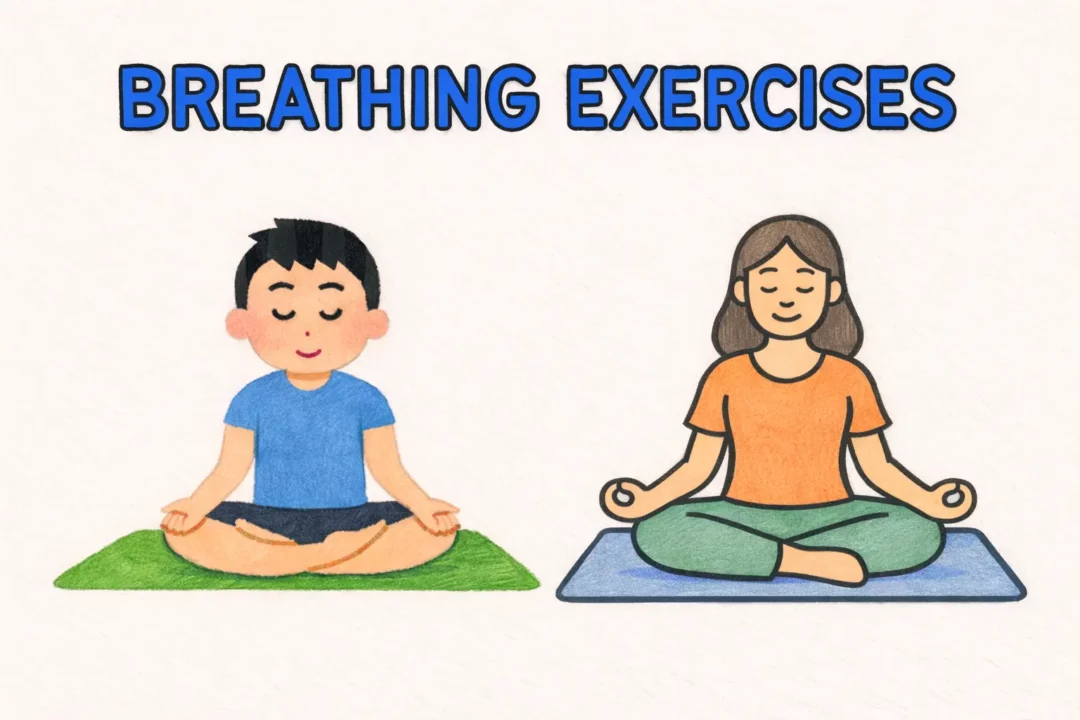
E) Breathing Exercises (5-7 minutes)
Breathing exercises are an important part of yoga and should always be included in a beginner’s daily routine. Simple breathing practices help calm the mind, improve focus, and create a sense of balance between body and breath. When practiced regularly, breathing exercises make yoga feel more relaxing and meaningful.
For beginners, even a few minutes of slow, mindful breathing can help develop better awareness and reduce mental restlessness. Breathing exercises can be practiced either before poses to prepare the mind or after poses to settle the body.
As the Ashtanga Yoga says, Asana (Yoga Poses) is the third step, and Pranayama (Breathing Exercises) is the fourth step. Also, from my personal experience, breathing exercises feel a lot deeper and calmer when practiced after the asanas. You can extend this session by meditating for 5-10 minutes at the end.
How Long Should Beginners Practice Daily?
For beginners, consistency is more important than duration. A daily routine of 20–30 minutes is enough to experience the benefits of yoga without feeling overwhelmed. As comfort and confidence grow, the duration can be increased gradually. Also, remember to avoid the common mistakes beginners make when practicing Yoga.
Conclusion
A daily yoga routine at home doesn’t have to be complicated. By including warm-up movements, basic standing poses, comfortable sitting poses, simple breathing exercises, and relaxation, beginners can build a well-rounded and enjoyable practice. The key is to move slowly, breathe mindfully, and practice regularly.
Yoga is a journey. Start simple, stay consistent, and let your practice grow naturally.
Frequently Asked Questions (FAQs)
The simplest way to tell is that you shouldn’t have any pain, discomfort, or uneasiness in the body after your yoga practice. Performing yoga asanas doesn’t hurt your body. If you are a beginner, you may feel slight pain in the body for 2-3 days. If the pain persists even after that, you should consider looking closely at your posture. Wrong postures can give you pain in the body. Neglecting the precautions might worsen your pain.
The most common mistake people make is that they don’t learn the proper form of asana; the second mistake is that they don’t listen to their body and tend to overperform.
To conclude the answer, start your yoga session with a warmup, then practice yoga asanas, and then end the session with a cooldown (Shavasana (Corpse Pose) or Yoga Nidra). Warm-up and cooldown are the most important sessions because warm-up prepares your body for the asana, and cooldown rejuvenates the body.
The best time for yoga practice is early morning, near sunrise. There are many reasons; let’s see a few of them.
1. The post-absorptive state:
In this state, the body uses all its energy in its building and recovery.
2. Empty Bowel:
When your colon is clear, it helps you to bend, twist, and do asanas comfortably.
3. Less disturbance:
Early morning is usually quiet.
4. Get rid of muscle stiffness:
The muscle stiffness after a night’s sleep goes away.
5. Gets your breathing right:
Getting your breathing right makes your mind calmer.
6. Releases happy hormones:
Yoga releases happy hormones. Which sets your mood for the day.