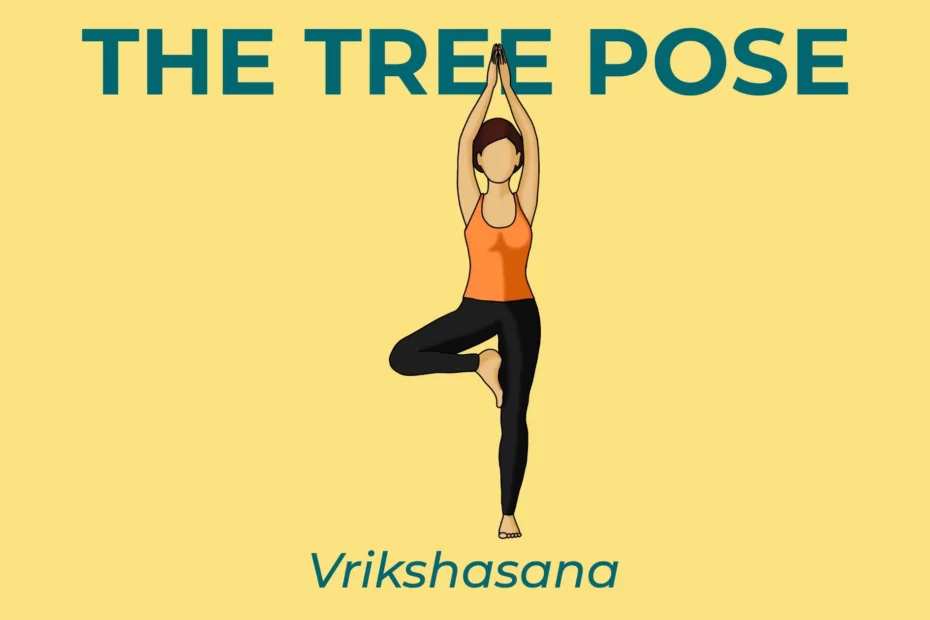
Welcome to a comprehensive guide on Vrikshasana, also known as Tree Pose in Yoga. In today’s fast-paced world, maintaining balance—both physically and mentally—can be a challenging task. Tree Pose beautifully symbolizes stability, grounding, and growth. Just like a tree that stands tall through changing seasons, this pose teaches us how to stay rooted while reaching upward.
What is Tree Pose in Yoga?
The word Vriksha means tree in Sanskrit. In this posture, the body resembles a tree—one leg firmly rooted to the ground while the other is placed against the standing leg, with arms extended upward like branches.
Tree Pose is a standing balance posture that improves focus, posture, and strength while calming the mind.
How to practice the Tree pose? (Step by step)
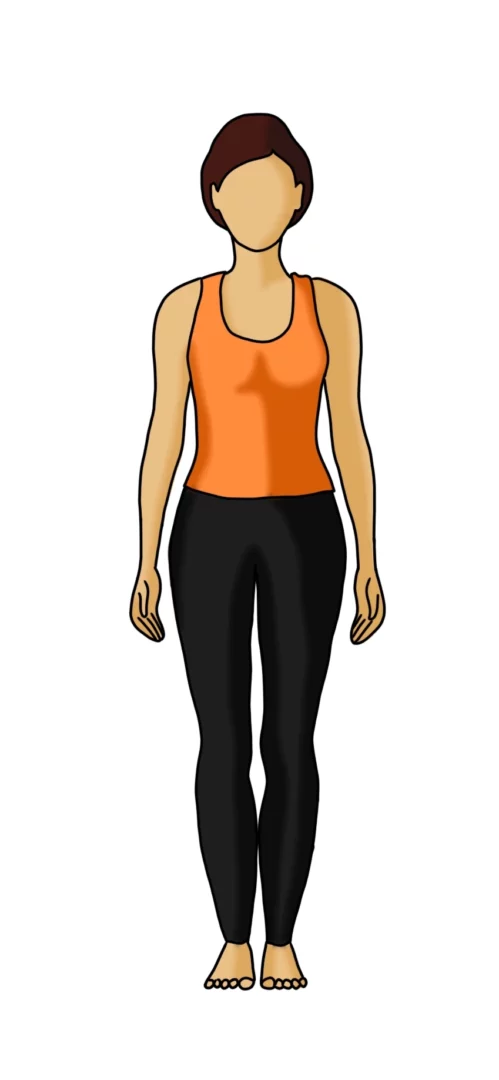
- Stand straight in Tadasana (Mountain Pose) with feet together.
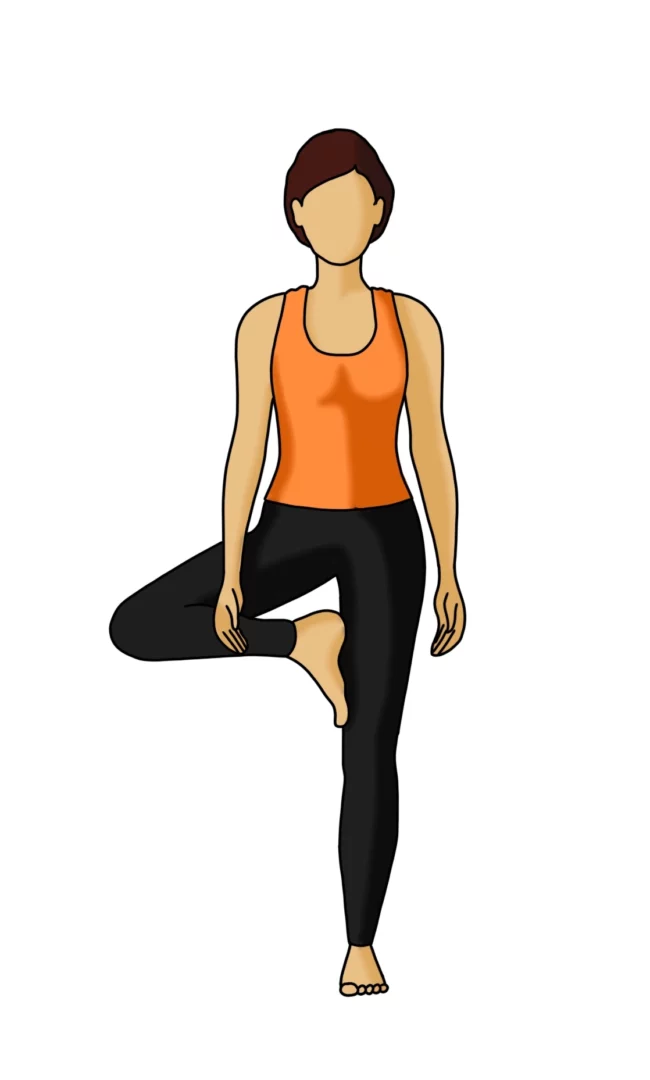
- Bend the right leg at the knee and place the right heel at the root of the left thigh. Rest the foot on the left thigh, toes pointing downwards.
- Balance on the left leg, join the palms, and raise the arms straight over the head.
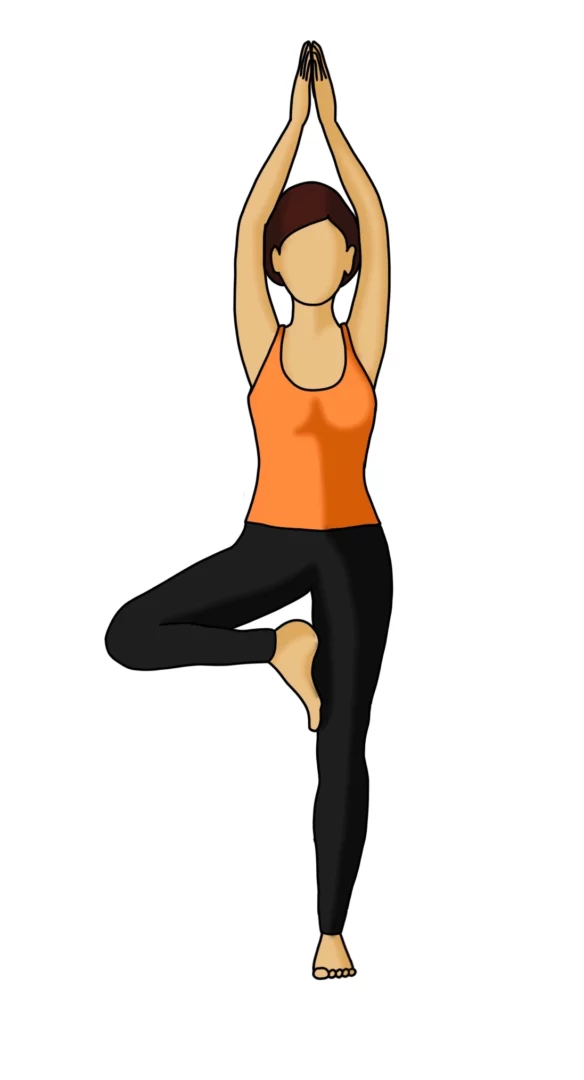
- Stay for a few seconds in the pose, breathing deeply. Then lower the arms and separate the palms, straighten the right leg, and stand again in Tadasana.
- Repeat the pose, standing on the right leg, placing the left heel at the root of the right thigh. Stay for the same length of time on both sides, come back to Tadasana, and relax.
Key Benefits of Tree Pose:
- Improves Balance and Stability: Regular practice strengthens the ankles, legs, and core, helping improve overall body balance.
- Strengthens Legs and Spine: Tree Pose tones the thighs, calves, and spine, promoting better posture and alignment.
- Enhances Focus and Concentration: Balancing on one leg requires mental alertness, making this pose excellent for improving focus and mindfulness.
- Calms the Mind: By combining steady breathing with stillness, Vrikshasana helps reduce stress and anxiety.
Common Mistakes to Avoid:
- Placing the foot directly on the knee joint
- Locking the standing knee
- Holding the breath
- Forcing balance instead of easing into the pose
Note: If you are a beginner, you may take support of wall behind you, or a chair near you while standing.
Conclusion:
Tree Pose may look simple, but it carries deep physical, mental, and spiritual benefits. With consistent practice, Vrikshasana helps you cultivate patience, balance, and inner strength—on and off the mat.
Just like a tree, stand steady, stay flexible, and keep growing.
Frequently Asked Questions (FAQs):
Although Tree Pose looks like a simple standing posture, it helps improve body alignment, ankle stability, hip strength, mental focus, and posture awareness. It also trains smaller stabilizing muscles that are often ignored in regular workouts.
Tree Pose challenges coordination, concentration, and muscle control simultaneously. Tight hips, weak ankles, poor posture, or lack of core engagement can make the pose feel unstable even though it appears simple.
Yes, Tree Pose strengthens the standing leg, calves, ankles, glutes, and core muscles. Holding the pose for longer durations increases muscular endurance and stability.
Yes, Tree Pose enhances proprioception — the body’s ability to sense movement and position — which improves coordination and balance in daily activities.