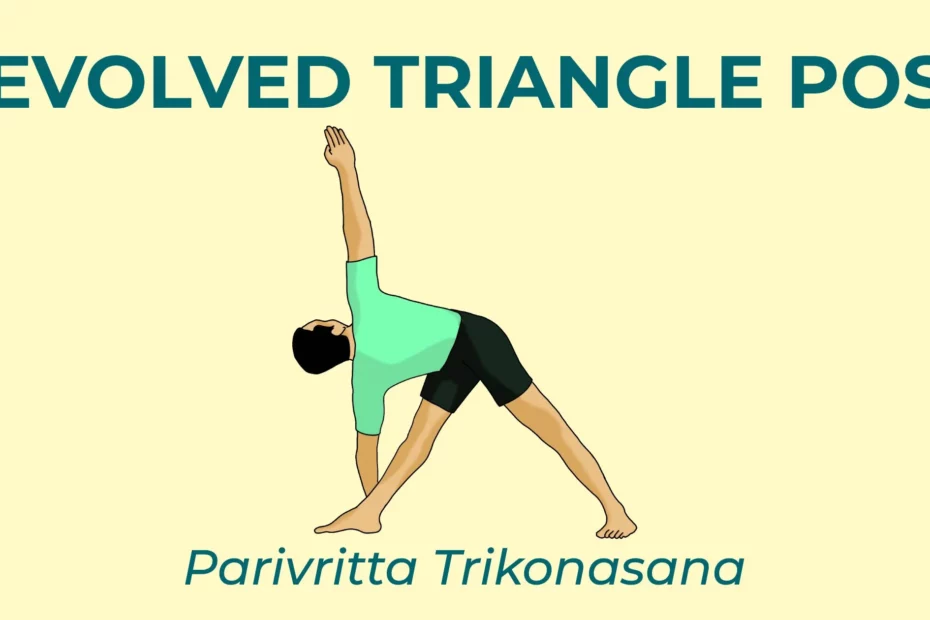
Revolved Triangle Pose is a standing posture performed with the legs apart, where the upper body gently twists over the front leg. The pose emphasizes balance, coordination, and body awareness, rather than flexibility alone. This article sheds light on the technique, benefits, and precautions you should know before practicing Revolved Triangle Pose.
What Is Revolved Triangle Pose?
Revolved Triangle Pose, also known as Parivrtta Trikonasana, is a standing yoga posture that combines balance, gentle twisting, and mindful breathing. The word Parivrtta means “revolved” or “twisted,” while Trikona refers to a triangle shape. Together, the Pose encourages stability while introducing a controlled spinal twist.
Although this pose looks advanced, beginners can practice Revolved Triangle Pose safely with simple modifications and proper alignment. It is commonly included in daily yoga routines practiced at home.
Revolved Triangle Pose Step-by-Step Technique
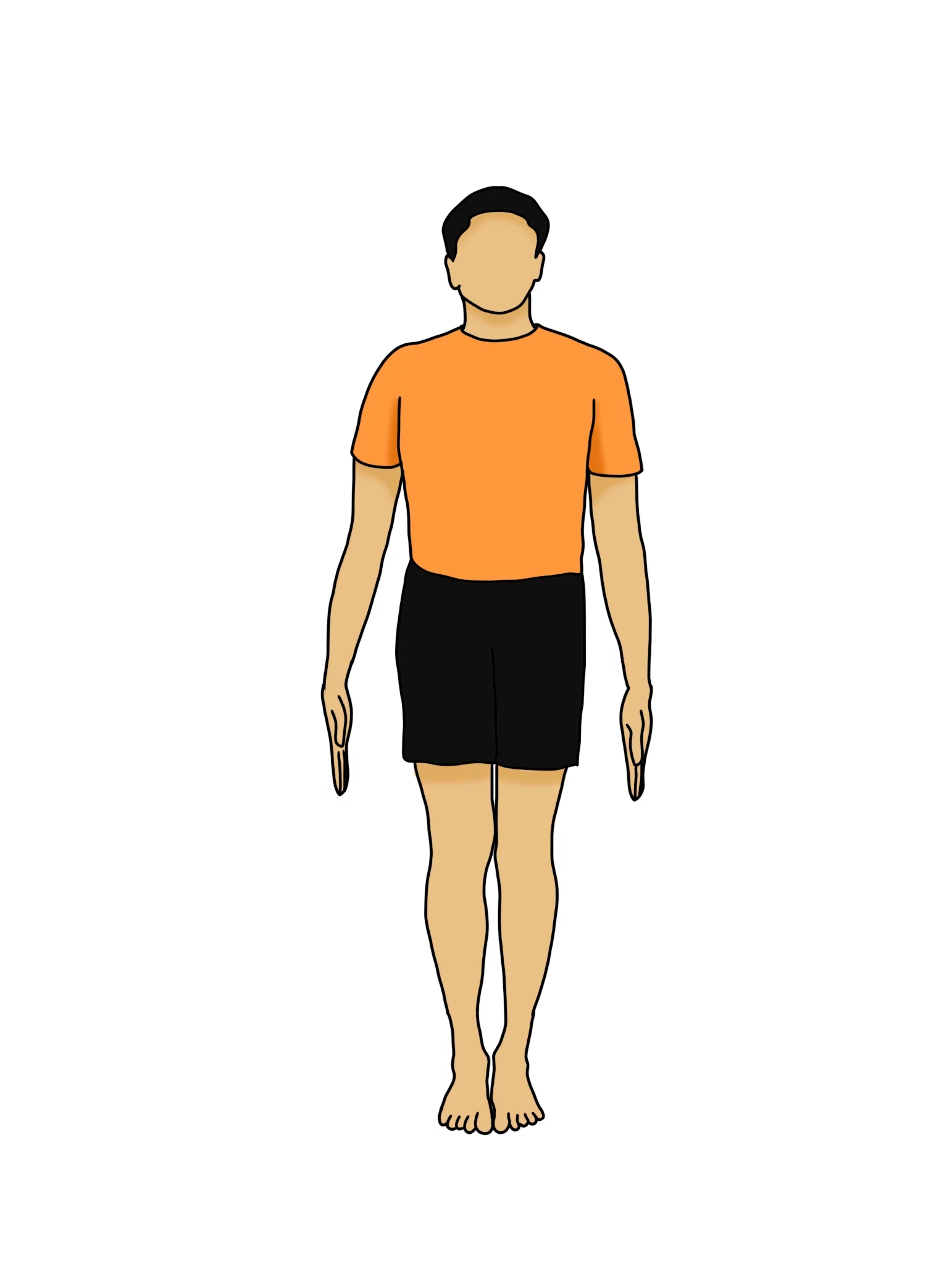
- Stand in Tadasana.
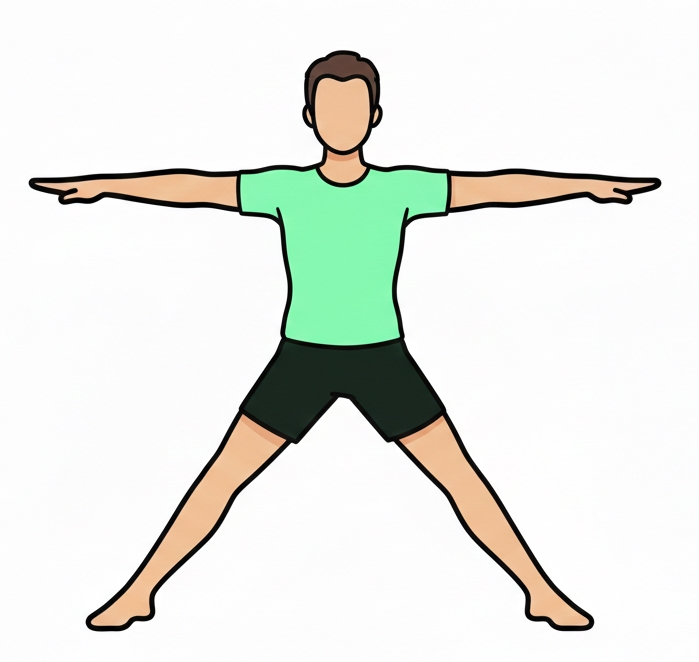
- Take a deep inhalation and, with a jump, spread the legs apart sideways 3 to 3.5 feet. Raise the arms sideways, in line with the shoulders, palms facing down. (As shown in the image below)
- Turn the right foot sideways 90 degrees to the right. Turn the left foot 60 degrees to the right, keeping the left leg stretched out and tightened at the knee.
- Exhale, rotate the trunk along with the left leg in the opposite direction (to the right) to bring the left palm on the floor near the outer side of the right foot.
- Stretch the right arm up, bringing it in line with the left arm. Gaze at the right thumb.
- Keep the knees tight. Do not lift the toes of the right foot from the floor. Remember to rest the outer side of the left foot well on the floor.
- Stretch both the shoulders and shoulder blades.
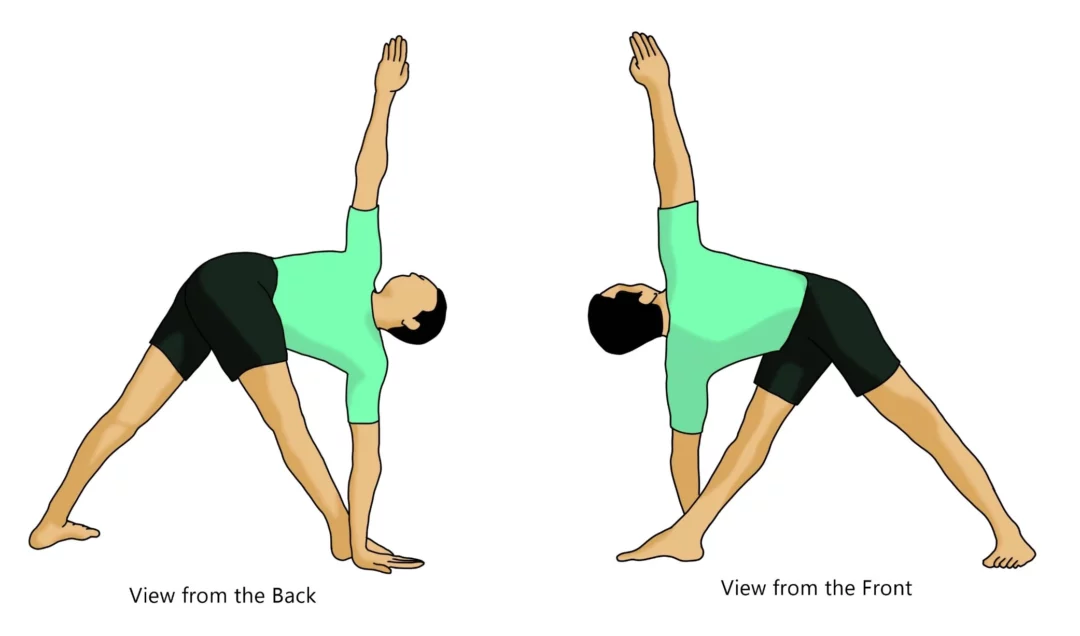
- Stay in this pose for half a minute with normal breathing.
- Inhale, lift the left hand from the floor, rotate the trunk back to its original position, and come back to the position shown in step no. 2.
- Exhale, repeat the pose on the left side by turning the left foot sideways 90 degrees to the left and the right foot 6o degrees to the left, and place the right palm on the floor near the outer side of the left foot.
- Inhale, raise the trunk back to its original position, bring the toes to the front, and keep the arms as in position in step no. 2.
- Exhale and jump back to Tadasana. This completes the asana.
- Stay in the pose for at least 3-4 deep breaths, on each side.
Benefits of Revolved Triangle Pose
When practiced regularly and mindfully, Revolved Triangle Pose offers multiple benefits:
- This asana tones the thigh, calf, and hamstring muscles.
- The spine and muscles of the back are also made to function properly.
- As the pose increases the blood supply around the lower part of the spinal region, this makes it one of the asanas for lower back pain.
- The chest is expanded fully.
- The pose relieves pains in the back, invigorates the abdominal organs, and strengthens the hip muscles.
Tips & Modifications for Beginners
This pose is usually practiced after warm-up movements and basic standing poses, making it easier to enter the twist comfortably. Using props and taking a gentle approach is always recommended, not only for this asana, but for every asana that you practice. Beginners should focus on comfort and alignment rather than depth.
- Use yoga blocks on the floor, under your palm, to reduce strain.
- Keep the hand higher on the shin instead of the floor.
- Maintain a long spine before twisting.
- Avoid collapsing the chest.
- Twist gently from the upper body, not forcefully.
These adjustments help make the pose accessible and safe.
Common Mistakes to Avoid
- Rounding the back
- Over-twisting the spine
- Holding the breath
- Forcing the hand to the floor
Mindful movement helps prevent discomfort and improve stability.
Who Should Avoid or Modify This Pose?
Practice with caution or guidance if you have:
- Severe spinal issues
- Recent surgery
- Balance difficulties
- Neck discomfort
Conclusion
Revolved Triangle Pose is a mindful standing posture that helps improve balance, coordination, and body awareness. With proper preparation and gentle modifications, beginners can safely include this pose in their home yoga routine.
Frequently Asked Questions (FAQs):
Yes, beginners can practice Revolved Triangle Pose with simple modifications. Using a yoga block for support and keeping the twist gentle helps maintain balance and comfort. The focus should be on lengthening the spine rather than twisting deeply.
Beginners can hold the pose for 10–20 seconds on each side while breathing normally. It is more important to feel stable and relaxed than to hold the pose for a long time. The duration can be increased gradually with regular practice.
Yes, Revolved Triangle Pose can be practiced daily when done mindfully and without strain. It works best when included as part of a balanced routine with warm-up exercises, other standing poses, and relaxation at the end.